Erik Werner · 20 September 2026
Exploring Data Synchronization Strategies in Digital Note Platforms During High-Traffic Periods
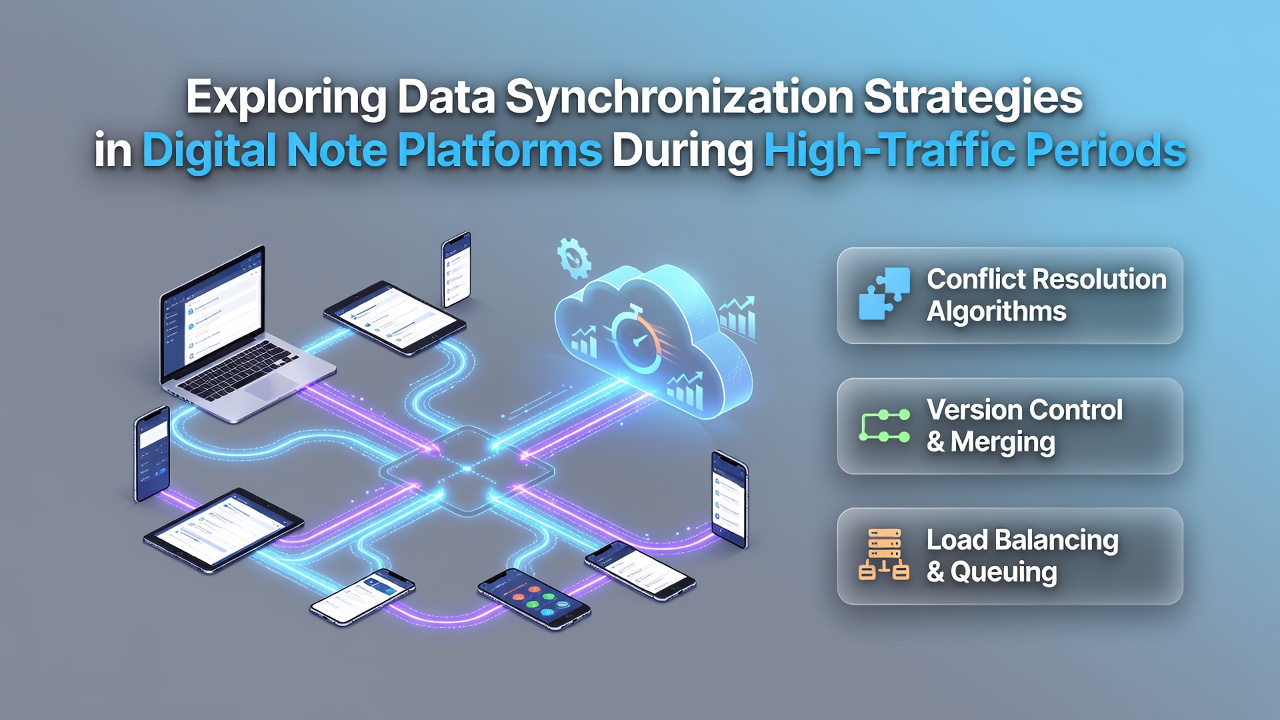
Digital note platforms face intense demands on their data synchronization systems when user activity spikes, and researchers have documented how these periods test the limits of real-time collaboration features, device consistency, and backend infrastructure. High-traffic intervals often coincide with academic calendars, corporate deadlines, and seasonal events, which means developers must balance speed, accuracy, and resource allocation while maintaining seamless user experiences across distributed networks.
Core Challenges in Peak Usage Windows
Traffic surges create simultaneous write operations from thousands of users, and this concurrency leads to version conflicts that require sophisticated resolution mechanisms; data from distributed systems studies shows that platforms relying on traditional locking approaches experience higher latency when multiple clients attempt updates on shared notes. Network variability compounds the issue because mobile and desktop users connect through inconsistent connections, which forces synchronization engines to handle partial transfers and retries without data loss. Observers note that platforms must also manage storage limits during these peaks, since cached changes accumulate faster than servers can process them into permanent records.
Delta Synchronization Techniques
Delta synchronization reduces bandwidth consumption by transmitting only modified portions of notes rather than complete documents, and this method has gained adoption because it scales efficiently when user counts rise sharply. Engineers implement change logs that track individual edits at the character or block level, which allows servers to merge updates from separate devices while preserving order and authorship metadata. Studies on distributed databases indicate that delta approaches cut synchronization time by significant margins compared to full-file uploads, especially when notes contain embedded media or large tables that remain unchanged during a session.
Platforms combine delta methods with compression algorithms to further optimize transfers, yet the approach still requires robust conflict detection to prevent overwritten content when two users edit overlapping sections at nearly the same moment. Researchers have tested these systems under simulated loads that mirror September 2026 back-to-school traffic patterns, where simultaneous logins from educational institutions produced measurable spikes in edit frequency.
Conflict-Free Replicated Data Types and Operational Transformation
Conflict-free replicated data types, commonly called CRDTs, enable independent updates on different replicas that merge automatically without central coordination, and this property proves valuable when network partitions occur during high-traffic events. Operational transformation, in contrast, adjusts incoming operations based on previously applied changes to maintain a consistent document state across all participants. Both strategies appear in production note platforms, with selection often depending on whether the service prioritizes eventual consistency or stronger ordering guarantees.
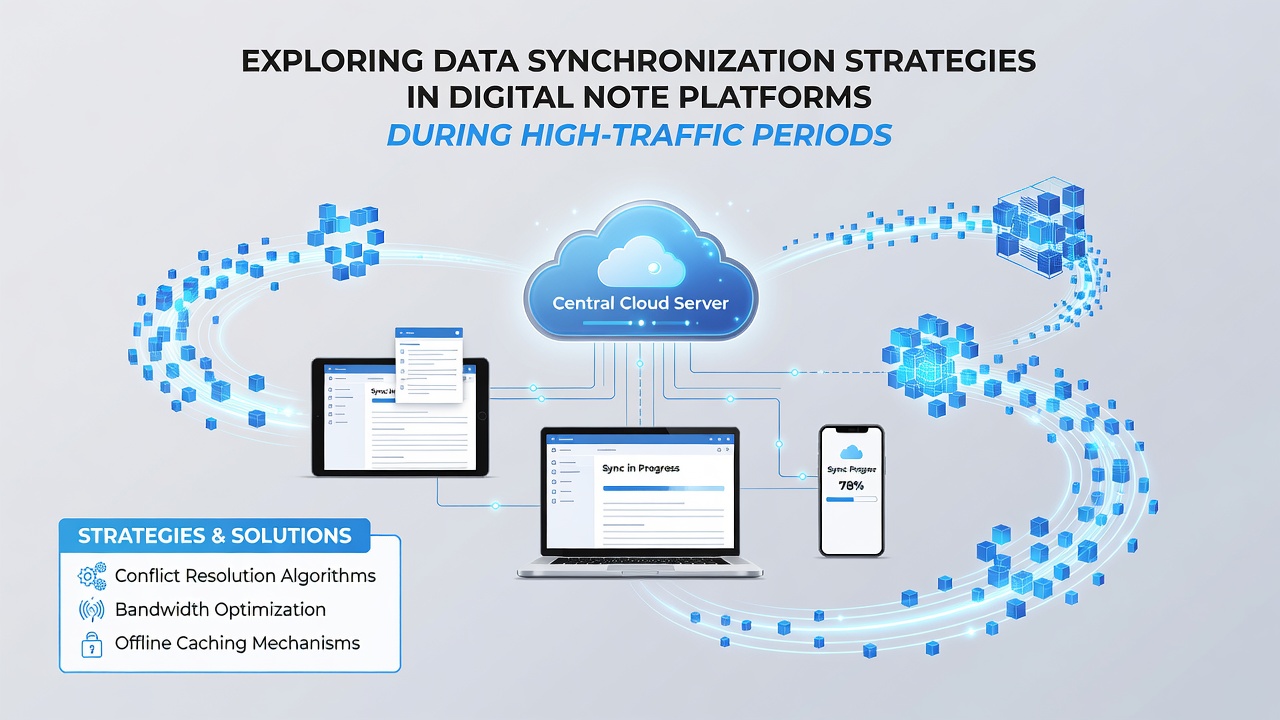
According to findings published by the National Institute of Standards and Technology on cloud data management practices, CRDT implementations demonstrate improved resilience in environments where connectivity fluctuates, because replicas converge once communication resumes without requiring manual intervention. Operational transformation systems, meanwhile, benefit from centralized servers that sequence operations, which reduces divergence but introduces potential bottlenecks when request volumes exceed planned capacity. Teams evaluating these options often run comparative benchmarks that simulate thousands of concurrent edits to identify which model sustains acceptable performance thresholds.
Monitoring, Scaling, and Geographic Distribution
Effective synchronization during peaks depends on real-time monitoring of queue lengths, replication lag, and error rates, which allows operators to trigger autoscaling before user-visible delays accumulate. Geographic distribution of data centers helps by routing users to nearer endpoints, thereby lowering round-trip times and reducing the chance that distant latency will stall collaborative sessions. Industry reports from research institutions in the European Union highlight how multi-region architectures maintain synchronization integrity across regulatory boundaries while complying with data residency requirements.
Load balancers and edge caching layers further support these strategies by intercepting read requests for unchanged note sections, which frees core synchronization services to focus on write operations. Data indicates that platforms incorporating predictive scaling based on historical traffic patterns experience fewer incidents during predictable surges such as those expected in September 2026, when combined academic and professional workflows intensify platform usage.
Conclusion
Data synchronization in digital note platforms during high-traffic periods relies on a combination of delta techniques, CRDTs, operational transformation, and distributed infrastructure to preserve consistency and responsiveness. Evidence from technical evaluations and operational deployments shows that careful selection and tuning of these methods enables platforms to handle elevated loads without compromising core functionality. Continued refinement of monitoring tools and geographic strategies supports reliable performance as usage patterns evolve through future peak intervals.